
Steam Shower vs Standard Frameless Enclosure
They can look nearly identical from the doorway — but a steam enclosure is a fundamentally different build. Here's what separates them and how to choose.
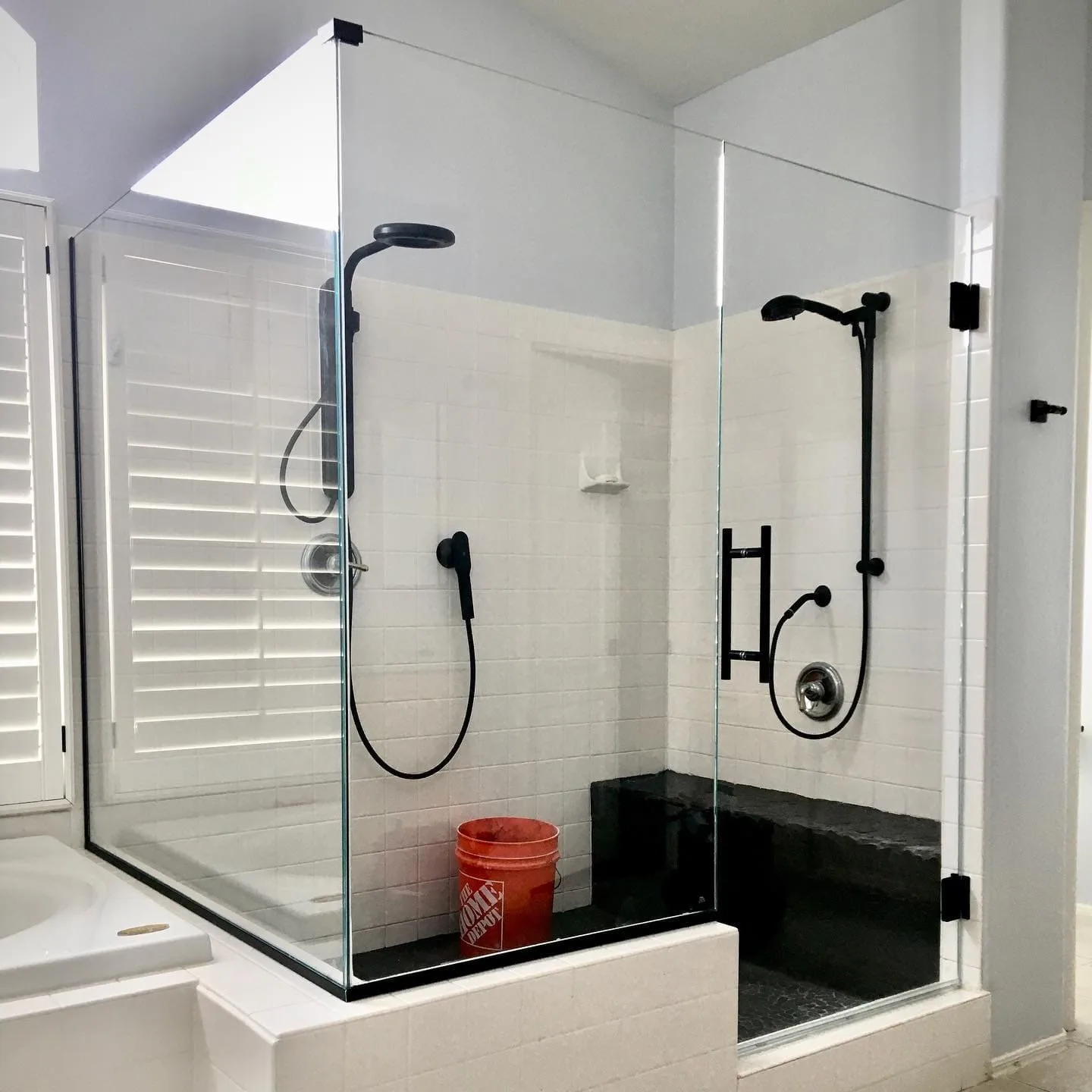
A standard shower enclosure manages water. A steam enclosure has to hold an atmosphere. That single difference drives everything else — the glass height, the seals, the hardware, even whether the enclosure needs a moving window at the top. If you're weighing the two for a remodel, here's the comparison we walk homeowners through at the measure appointment.
What a standard frameless enclosure does
A standard custom frameless enclosure is built to keep spray in and let air move. The glass typically stops short of the ceiling, gaps around the door are small but intentional, and steam from a hot shower drifts up and out to the exhaust fan. That open-topped design is a feature, not a shortcut: airflow is what dries the enclosure between uses and keeps the bathroom from becoming a humidity box. For most bathrooms and most budgets, this is the right build — open, bright, easy to clean, and simpler to fabricate.
What changes in a steam enclosure
A steam shower reverses the goal: now the enclosure must trap hot vapor produced by a steam generator, holding it long enough for a proper session. That means glass runs to the ceiling and every joint is sealed. The door gets full-length seals and sweeps instead of open gaps. And because a fully sealed glass box would trap heat indefinitely, a proper steam enclosure includes an operable transom — a hinged panel near the ceiling you crack open after a session to vent the vapor and let the enclosure dry. The ceiling inside a steam shower should also be sloped or handled so condensation runs down the walls instead of dripping cold on your shoulders; that's a tile-stage detail worth planning before glass is ever measured.
None of this is bolt-on. Sealing, transom placement, and ceiling-height glass have to be engineered into the enclosure from the first measurement — which is why converting a standard enclosure to steam later usually means new glass, not new gaskets.
The parts of the project that aren't glass
Honesty requires saying this plainly: the glass is only one piece of a steam shower. The steam generator needs a location, a dedicated electrical supply, and a water line — that's licensed-trade work by an electrician and plumber. The enclosure interior needs full waterproofing behind the tile, built for constant vapor rather than occasional spray. We fabricate and install the sealed glass enclosure and coordinate measurements around the generator plan, but a steam project is a small team effort, and it goes smoothest when the glass shop is brought in early rather than after the tile is done.
Cost and complexity, honestly framed
A steam enclosure costs more than a standard one of the same footprint — more glass (it runs to the ceiling), more fabrication (seals and an operable transom), plus the generator and trade work that are separate from the glass entirely. We won't quote numbers in an article, because steam projects vary too much for honest generalities; what we will say is that the difference is driven by real materials and labor, not markup, and a free in-home measure gets you a real figure for your bathroom.
Living with each one
Day to day, the two enclosures ask different things of you. A standard enclosure wants a squeegee pass and a running fan — that's it. A steam enclosure adds a small ritual: crack the transom after each session, let the enclosure vent and dry, and keep the seals and sweeps clean so they keep sealing. Las Vegas hard water affects both equally, so the same protective coatings and towel-dry habits apply. Neither routine is burdensome, but the steam routine is one you have to actually do — a sealed glass box that never gets vented is how mildew finds a foothold in an otherwise beautiful enclosure.
Which one is right for you?
Choose a standard frameless enclosure if you want the open, modern look, straightforward maintenance, and the best value — it's what most Las Vegas bathrooms are best served by, and it's the majority of the 1,000+ enclosures we've installed since 2010. Choose steam if you'll genuinely use it: for households that love the spa ritual, dry desert winters make a steam session especially worthwhile, and a well-built steam room is a daily-use feature, not a novelty. The deciding question isn't the hardware — it's whether steam bathing is something you'll do twice a week or twice a year.
If you're leaning steam, our steam shower enclosures page covers the sealed-glass builds we do; either way, the right time to decide is before tile goes up, while every option is still open.
Weighing steam vs standard?
Baja Glass and Mirror builds both. We'll look at your bathroom, your plans, and give you a straight recommendation.
Call (702) 383-0779 for a free in-home measure